

Vanguard Reflections on the James Wimberly Institute of Black Studies and History Awards Ceremony — and what it means to stand on the shoulders of those who refused to be stopped.
by HAROLD MICHAEL HARVEY
There are evenings that pass — pleasant enough, soon forgotten — and then there are evenings that settle into your bones and ask to stay forever. Last Saturday night was the latter. By the time I returned to Atlanta in the quiet hours that now belonged to this early Monday morning, I couldn’t sleep. The images kept returning: the warm glow of the Anderson Conference Center on Eisenhower Parkway in Macon, Georgia; the hushed, expectant murmur of a room full of people who understood, in their marrow, why they had gathered; the weight of history pressing gently but insistently against every handshake, every smile, every word spoken from the podium.
The occasion was the annual Racial Barrier Breakers Awards Ceremony of the James Wimberly Institute of Black Studies and History, held on October 17, 2026, under the theme “Saluting Barrier Breakers, Visionaries, and Vanguards.” That theme was not merely a banner strung above a stage. It was a living declaration—a covenant, really—between an institution devoted to telling Black history expansively and the Middle Georgia community it has served faithfully since 1998.
The James Wimberly Institute Barrier Breakers gala has become Macon, Georgia’s social event of the year. The Anderson Conference Center, situated on that familiar stretch of Eisenhower Parkway, became something larger than a venue last Saturday night. It became a sanctuary of remembrance and possibility.
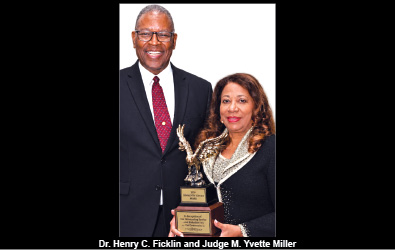
Dr. Henry C. Ficklin, president and director of the Wimberly Institute, carries about him the quiet authority of a man who knows exactly why the work matters. When he welcomed the room, his words didn’t feel like remarks from a lectern—they felt like an invitation into a larger story. Dr. Ficklin founded this institute in honor of educator James Wimberly, whose lifetime of service was rooted in the radical belief that Black history belongs not only to a month in February or a week in June, but to every season, every classroom, every kitchen table conversation. Standing in that room, listening to Dr. Ficklin speak, I felt the full force of that conviction. This was not a ceremony. It was a continuation.
The air itself seemed charged with something I can only describe as reverence — a collective acknowledgment that the people assembled in that room had been placed there by forces larger than an invitation and a dress code. Macon has always been that kind of city for me: a place that makes you feel the layers of time beneath your feet. And Saturday night, those layers rose to the surface, gentle and insistent, reminding us all that those who came before broke the ground we stand on.
The Journey to the Podium
Dr. Henry Clay Ficklin presented the 2026 Vanguard Award to Harold Michael Harvey
When my name was called, and I made my way toward the podium to receive the Vanguard Special Recognition Award, I was aware of every step. Not in a self-conscious way — in a grateful way. Macon is where my story began, where the roots of who I am as a writer, as a publisher, as a teller of Black stories, first pushed down through the soil. To be recognized in this city, by this institution, in this company, carried a significance I am still processing as I write these words in the dark hours before dawn.
A “vanguard,” by definition, leads — who moves out front and into the uncertain territory so that others need not navigate it blind. I have tried, in my work with Cascade Publishing House and across the years of writing that preceded it, to be that kind of presence. Not out of bravado, but out of obligation — a debt I owe to the storytellers and freedom-seekers who cleared the path for me. To have that effort named and honored by the Wimberly Institute brought a fullness to my chest that I did not anticipate.

Harold Michael Harvey sharing a moment with his mother Elaine Harvey on his 75th birthday, the day before the James Wimberly Institute Award.
She was not in the room — my mother, Elaine Harvey, was not there; she is 97 years old — and yet she was the most present person in it. From the very beginning, she taught me to pay attention: to listen for the truth beneath what people say, and to stand up when something needed to be said, whether or not it was comfortable. She raised me to respect courage and to honor sacrifice, and when I stood at that podium, I was standing on the full weight of everything she poured into me. My book Fantasy Five—the story of five individuals whose courage and vision changed Macon forever—exists because my mother taught me to see people clearly and tell their stories with care. She gave me the eyes and the conscience for that work long before I knew I would ever do it. I thought about that last Saturday night. I thought about how every sentence I have written traces itself, if you follow it far enough back, to something she said, something she modeled, something she refused to let me overlook. Everything I’ve done at seventy-five began with what she planted at five. As I said in my acceptance speech, “Mama, from where you are, I want you to know: your son did not break a barrier tonight. He wrote about the people who did — and he learned to do that from you. I hope she feels the pride of knowing that her lessons became a book, and that the book preserves a legacy that Macon will carry forward long after all of us are gone.”
“Everything I’ve done at seventy-five began with what you planted at five. Tonight belongs to her as much as it belongs to me.”
— Harold Michael Harvey

Cynthia Harvey and Harold Michael Harvey met across the street from the Anderson Conference Center at what was then Macon Jr. College forty-seven years ago. They have been sharing their lives since then.
But nothing — not the award itself, not the applause, not the warmth of Dr. Ficklin’s handshake — moved me as profoundly as the faces gathered around my table. I want to begin with Cynthia, my wife, because every honest account of my life must begin with her. She has been beside me through the drafts and the doubts, through the long nights of writing and the longer mornings of revision, through every risk we took together when Cascade Publishing House was more vision than reality. To look out from that podium and find her face in the crowd is to understand, in the most immediate way, that no one accomplishes anything meaningful alone.
Seated in the room with her was Dr. Merchuria Chase Williams, Cynthia’s college classmate, whose distinguished presence added its own grace to the table — a reminder that the women who shaped Cynthia have, by extension, shaped everything Cynthia and I have built together.
Then there were DeWayne Davis and Willie Blash. I taught those young men when they were fourth graders — boys who raised their hands with the urgent, unfiltered curiosity of children who still believe the world will answer every question they put to it. When I met them, they had no hope that the future held anything special for them. I taught them Black history and gave them something to build pride in themselves. They are grown now, purposeful and present, and watching them applaud from those seats undid me in the quietest, most necessary way. A teacher rarely gets to witness the long arc of what he plants. That evening, I saw it. At another table sat Cheryl Lattimore, my college classmate, who had flown in specifically from Rochester, New York, to be in that room. She knew me before the books, before the publishing house, before any of it; she carries the specific and irreplaceable knowledge of who I was before I became who I am. Her presence was a reminder that no one arrives at a podium entirely by his own making; some people refuse to let you become less than what they always saw in you.
Also in the room were Freeman Lester and Janice Lester, beloved members of my church family, along with Janet Humasudeen and Barbra Griggs, other cherished presences from that same community of faith. I must pause on Freeman, because his story — or rather, his mother’s story, and mine within it — is perhaps the most extraordinary convergence of history that I witnessed all evening. Freeman’s mother is Inez Lester. And Inez Lester is the woman in whose arms held me as we listened to Dr. Martin Luther King Jr. deliver the “I Have a Dream” speech. I have carried that memory my entire life. That it should fall to me, more than six decades later, to sit in a room with Inez Lester’s son at a ceremony honoring my own contributions to the unfinished work Dr. King that day named — I have no adequate words for that. History is rarely so deliberate, so elegantly circular. It felt less like coincidence than like confirmation. And then there was Jacqueline Cummings, my mentee, a community activist with a sharp mind and serious purpose, watching the evening with the wide, absorbing attention of someone already, quietly, deciding what her own contribution will look like. That table, taken together, was its own testimony. Everything I have written, every story I have told, was written for rooms — and people — exactly like these.
A Moment with Dr. Neil Cullinan
Dr. Neil Cullinan and Harold Michael Harvey, who shared a connection to the Rev. Julius C. Hope campaign for mayor, met for the first time at the Awards Gala.
Among the gifts an evening like this bestows — beyond the formal recognition, beyond the beauty of the ceremony itself — are the quiet, unscripted moments that occur in the margins. My exchange with Dr. Neil Cullinan was one such moment, and I find it returning to me again and again as I sit here writing. When we met face to face, two men who had arrived at the same crossroads by very different roads, an immediate, wordless understanding passed between us. Dr. Cullinan spoke with a measured warmth that tells you a person has spent their years in genuine service—not in pursuit of applause, but of something far more durable. I told him how much it meant to share that space with him, and I meant it without qualification. He, in turn, offered words of affirmation about the power of storytelling in the preservation of community — words I will carry with me for a long time.
What struck me most, standing with Dr. Cullinan in that brief but meaningful exchange, was the sense that two separate arcs of a longer story had momentarily converged. Each of us had walked our own particular path through the landscape of American life — had encountered our own particular barriers, had found our own particular ways of refusing to let those barriers be the final word — and here, in the warm light of the Anderson Conference Center, those paths met. There was no grandeur in the moment. There did not need to be. Two people recognized, in each other, the texture of a life lived in purposeful service. That recognition, offered quietly and received quietly, was its own kind of honor.
The Company of Giants
To receive an award in isolation is one thing. To receive it in the company of people who have genuinely earned their place in the room is something else entirely—humbling, galvanizing, and clarifying all at once. I found myself in precisely that company last Saturday night. The Racial Barrier Breakers honored at this year’s ceremony represent a breadth of contribution that resists easy categorization: Donald L. Druitt Sr., whose steady and persistent work has left its mark on the fabric of this region; Samuel Hart Sr., whose lifetime of service from Upward Bounds, to the County Commission, to the Water Board, speaks in the language of dedication; and Horace Holmes Jr., a name that carries the earned weight of community commitment. Anissa Monique Jones brought a spirit of forward motion to the evening—the kind of energy that reminds you barrier-breaking is not only a historical act but a living, daily practice. Russell Nelson and Charles E. Richardson were present with the quiet dignity of men whose contributions are felt even when they are not loudly announced. And Brenda A. Sutton Williams—her presence in that room felt like a testament to the particular courage it takes for women in this community to lead, persist, and be recognized for doing so without diminishment. Each of these honorees carried themselves with the grace of people who have been doing the work long before anyone thought to give them a plaque for it.
Then there is Judge Pamela White-Colbert, recipient of the Visionary Special Recognition Award. If the “Vanguard” designation speaks to those who lead into new territory, the “Visionary” designation speaks to those who can see the territory before it even exists — who hold in their minds a version of justice and possibility that the world has not yet caught up to. Judge White-Colbert embodies that rare gift. Her career on the bench represents not merely legal service but the kind of moral imagination that the law, at its best, is supposed to make room for. To share a stage — and an evening — with her was one of this night’s quiet privileges.

Judge M. Yvette Miller grooving to the music alongside Rev. Walter Glover.
The evening featured a stirring speech by recently retired Chief Judge of the Georgia Court of Appeals, Judge M. Yvette Miller, who hinted she is not finished with public service. Could the first Black woman named Miss Macon in 1979 become the first Black woman mayor of the Macon-Bibb County Consolidated Government?
What It All Means
The James Wimberly Institute of Black Studies and History was founded in 1998 with a straightforward but radical premise: that the history of Black Americans is too vast, too vital, and too consequential to be confined to the margins of a curriculum or the narrowness of a single commemorative month. James Wimberly — the educator whose legacy the institute was built to honor — understood that expanding the knowledge of Black history and culture is not a supplement to the American story. It is the American story, told in all its fullness. Dr. Ficklin has carried that understanding forward with conviction, and the annual awards ceremony is among the most visible expressions of that mission: a public declaration that the people of this community who have broken barriers, imagined new futures, and led their neighbors toward something better deserve to be named, celebrated, and remembered.
For Middle Georgia — a region whose history contains both the deepest wounds and the most extraordinary acts of resilience this country has produced — that mission is not abstract. It is as immediate as the next generation of young people who will come of age here and need to know that someone who looked like them prepared the ground beneath their feet. What the Wimberly Institute does, year after year, is tend that ground. It tells the young people of this region: here are the names of those who came before you. Learn them. Honor them. And then do something worthy of being remembered yourself.
The Room, the Night, the Promise
It is past one o’clock on this October Monday morning, and the city of Atlanta is quiet around me. But I am still, in some essential part of myself, standing in that room on Eisenhower Parkway. I keep returning to Jacqueline Cummings’s face as I spoke — that stillness, that absorption, that look of a young woman quietly deciding what she is willing to become. I keep returning to DeWayne and Willie, grown men in chairs where I once only imagined them, offering the kind of applause that no reviewer or prize committee can replicate. I keep returning to Cheryl Lattimore, who crossed the better part of a thousand miles to sit at that table — and to what it means that she came. I keep returning to the thought of Inez Lester, Freeman’s mother. Of the small child I was in her arms listening to a dream being named aloud for the first time — and to the strange, humbling grace of finding myself, all these years later, at a ceremony that honors the ongoing work of that same unfinished dream. And I keep returning to Cynthia, beside whom every chapter of this life has been written, and without whom none of it would have held together. They were not merely witnesses to an award ceremony. They were the living argument for why the work matters, why the barriers had to be broken, and why the breaking is never finished. I walked into the Anderson Conference Center as a writer and a publisher seeking to honor a community. I walked out understanding, more fully than I ever have, that the community had long been honoring me. The barriers were real. The vanguards who broke them were real. And the work — God willing — continues.
✦ ✦ ✦
ABOUT THE AUTHOR
Harold Michael Harvey is an award-winning author, publisher of Cascade Publishing House, and public storyteller based in Atlanta, Georgia. His work spans literary fiction, cultural commentary, and community narrative— always rooted in the living tradition of Black American storytelling. This article was written at the request of publisher Alex Habersham for the Middle Georgia Black Pages.

